
Together with Bentley Systems, the Global Resilience Partnership (GRP) has developed a new e-course. The course equips infrastructure professionals with the knowledge and tools to navigate an increasingly complex risk landscape.
Recognising the growing need for resilience expertise in the infrastructure sector, the learning series is designed for early career infrastructure professionals, recent graduates, and aspiring engineering students. The courses bridge the gap between resilience science and infrastructure practice, helping learners understand how to apply resilience insights across sectors such as energy, water, transport, cities, and mining.
The series consists of four self-paced courses, each exploring different resilience themes, lectures with leading researchers in resilience science, and features real case studies and practical examples. Each course takes approximately one to one and a half hours to complete.
This learning series is based on the Resilience Science Must-Knows report, an initiative led by the Stockholm Resilience Centre, Global Resilience Partnership, and Future Earth. The report distils decades of resilience research into nine key insights designed for decision-makers and implementers interested in building and enabling resilience. Through a large collective effort of the global resilience research community, the Must Knows involved surveys with resilience experts, global editorial leadership, a comprehensive literature review, and consultation dialogues with decision-makers worldwide. Together, they provide a practical and evidence-based foundation for understanding and applying resilience in real-world contexts.
Course One introduces learners to the foundations of resilience. It explores why resilience matters in an increasingly complex and uncertain world and examines infrastructure systems as complex adaptive social-ecological systems. This course introduces Must-Know One and Two.
Course Two looks at why resilience investment pays off, and why resilience is not an end-state but a dynamic cycle of learning, experimentation, and innovation. This course focuses on Must-Know Three and Four.
Course Three explores how to strengthen resilience in practice by highlighting its two cornerstones: diversity and relationships. This course aligns with Must-Know Five and Six.
Course Four focuses on governance, trade-offs and equity dimensions of resilience, encouraging learners to consider whose resilience is prioritised, who bears the costs, and how trade-offs can be negotiated more fairly. This course will teach you about Must-Knows Seven, Eight, and Nine.
The first course in the series is now freely available on the Bentley Systems Learning Platform. Participants who successfully complete the course will receive a certificate of completion.
Whether you are beginning your career, studying engineering, or looking to strengthen your understanding of resilience in practice, this learning series offers an accessible introduction into the most important concepts of resilience science.
Courses two to four will be released throughout the year.
The nine Must-Knows highlight that:
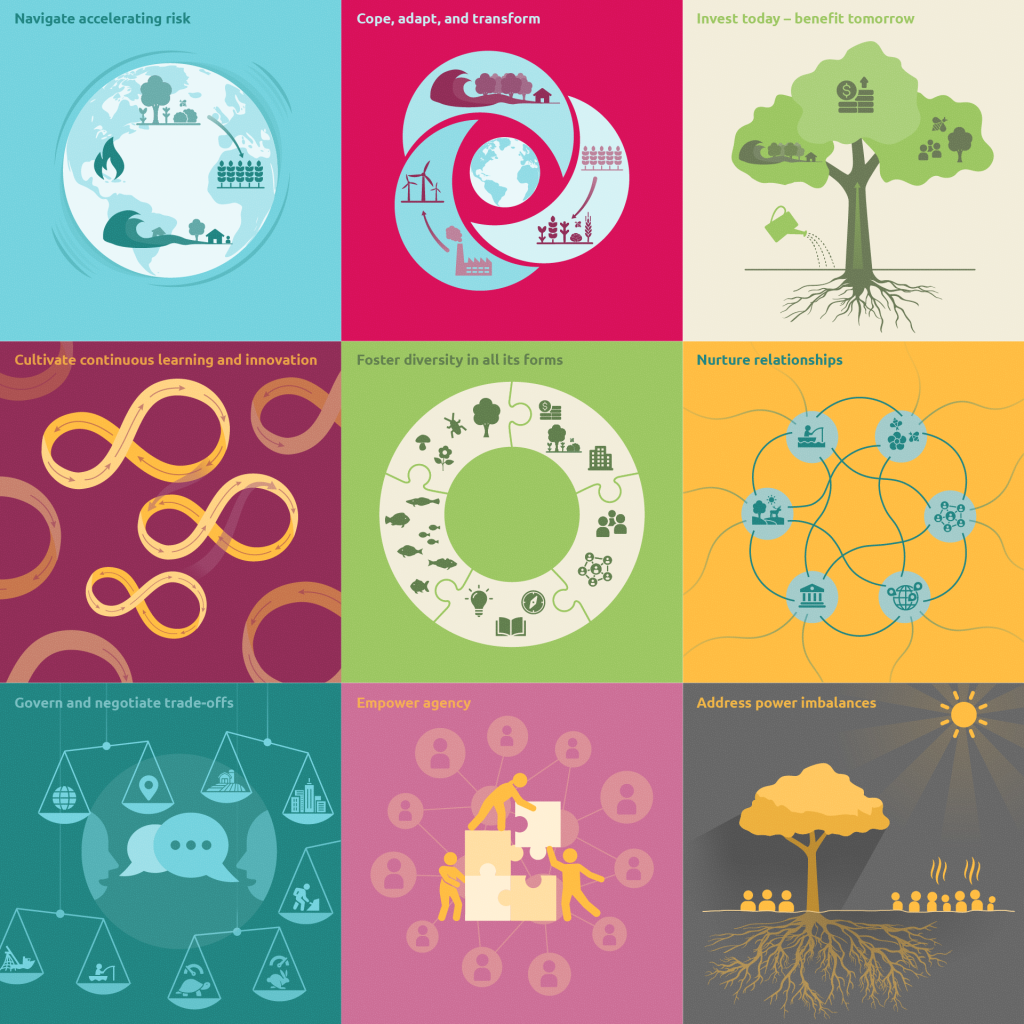
1. Resilience is critical for navigating accelerating risk
Rising crises, shocks, and inequalities are creating new challenges. Resilience offers pathways toward more just and sustainable futures for people and the planet.
2. Resilience requires balancing the capacities to cope, adapt, and transform
Resilience is not just about bouncing back, it is about building the capacity to cope with shocks, adapt to change, and transform systems away from undesirable trajectories, while finding the right balance between these capacities.
3. Investing in resilience today reduces costs tomorrow
The return on resilience investment far exceeds its initial cost. Investment in resilience protects and strengthens the social, economic, and ecological foundations that support long-term human well-being and prosperity.
4. Resilience is a cycle of learning and innovation
Resilience is a cycle that demands continuous experimentation, learning, and innovation. Understanding resilience dynamics and the alternations between phases of rapid change and relative stability opens pathways to new and better futures.
5. Diversity is essential for resilience to thrive
Diversity is a cornerstone of resilience, providing options for persistence and sources of innovation to enable adaptation and transformation. It includes biodiversity as well as diversity in knowledge systems, cultures, practices, social structures, institutions, and livelihoods.
6. Relationships among people and with nature build resilience
Resilience grows through relationships, between people, with nature, and within landscapes and ecosystems. These connections strengthen the flow of resources, knowledge, trust, and care.
7. Governing and negotiating trade-offs is key to resilience
Almost every decision involves trade-offs, and addressing these across scales, interests, and generations is vital to avoid unintended harms, prevent conflict, and build just, lasting resilience.
8. Empowering agency unlocks resilience
Agency is key to activating core resilience capacities. Supporting and developing agency means enabling people and institutions to take intentional and grounded action.
9. Address power imbalances to foster equitable resilience.
Building resilience requires directly addressing social inequalities, power imbalances, and historical injustices. Otherwise, resilience interventions risk reinforcing the very systems that cause vulnerability.