Lead organisation: The Centre for Climate Change and Environmental Research (C3ER) at BRAC University
Partners
- BRAC
- University of Dundee
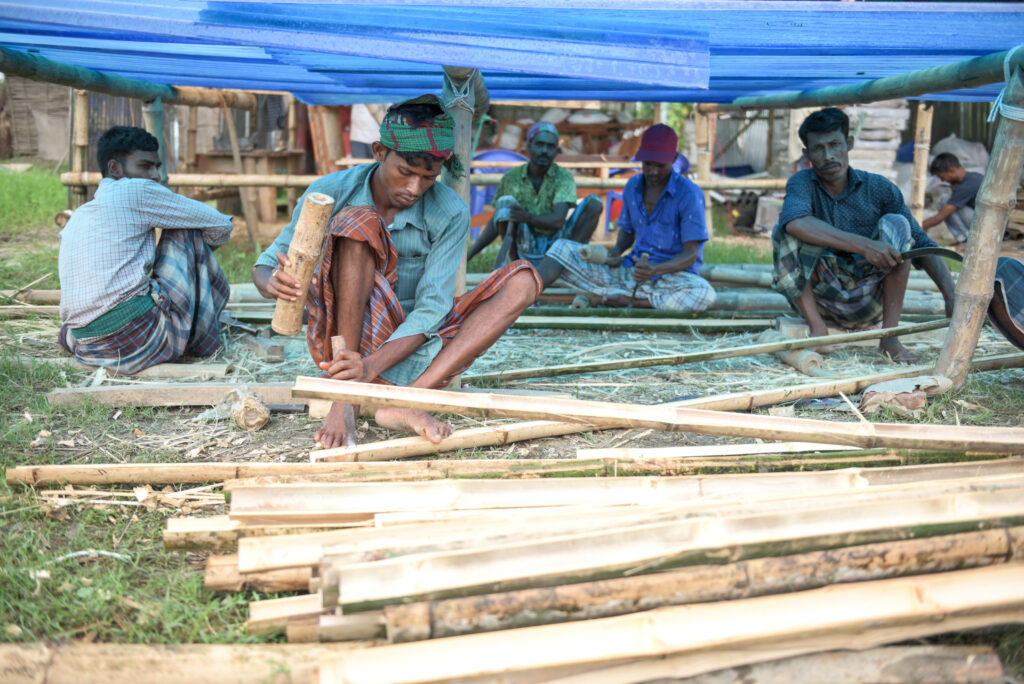
The Centre for Climate Change and Environmental Research (C3ER) at BRAC University has tested community-led innovations that enhance the resilience of households and communities before, during and after floods, and develop a future implementation strategy at scale across Bangladesh. The project solution involved the design and testing of flood- resilient houses, and related integrated innovations such as water harvesting, cage fishing and renewable energy using a community-based participatory process.
By July 2018, three floating houses were constructed. The houses can comfortably fit a family of 6 and they are self-contained as a functional hydroponics, aquaponics, and chicken rearing structures have been set up. In the event of flooding, the family will still be in a position to produce its own food (fish, chicken and a variety of vegetables).
Key Achievements:
- Three floating homes were built and handed over to the households:
- They float uninterrupted during flood and are resilient to storms.
- It can produce food for dietary balance and nutritional security.
- Fresh water is sourced from a sustainable rainwater source.
- The house is fully supplied by renewable electricity sources.
- 64 stakeholders trained in capacity building on flood resilient homes.
- The flood resilient homes have turned into a landmark of Shariatpur district, with people from all over the district and beyond visiting.
- The home sets an example for multiple innovations practicing the norms of co-design, facilitating technology transfer and built on the principles of sustainability and community driven decision-making.
- Floating homes gained significant exposure in local and global media.