The City Resilience Index provides a holistic approach to diagnosing a city's resilience, structured around four dimensions (leadership and strategy, health and wellbeing, economy and society, infrastructure and environment) and 12 goals (e.g. diverse livelihoods, social stability and continuity of critical services). The measurement measures relative performance over time rather than a comparison between cities. It aims to open dialogue and knowledge sharing between city stakeholders for policy change as the tool application facilitates them to identify their strengths, weakness, and priorities for action. It has a set of 52 indicators which are assessed through 156 questions. Those indicators stack up against the 12 goals (e.g. indicators 'for diverse livelihoods' include 'the degree of relevant skills and training'). This tool is a highly operational approach that lends itself to measuring the resilience of cities to diverse shocks and stresses.
The tool comprises a set of indicators, variables and metrics that cities can use to measure their resilience and compare their performance over time. The methodology has focussed on credibility and usability to ensure that the Index is technically robust, based on evidence of what contributes to city resilience and current best practice in urban measurement. The key research activities include an extensive literature review, desk study, expert consultation, and city engagement. The measurement involves converting qualitative (or subjective responses) to the 156 questions into numerical scores that can then be aggregated to communicate key strengths and weaknesses based on the 12 goals. Quantitative analysis is needed to serve as an effective proxy for performance toward certain indicators (e.g., the coverage of transport access).
Climatelinks is a global knowledge portal for USAID staff, implementing partners, and the broader community working at the intersection of climate change and international development. The portal curates and archives technical guidance and knowledge related to USAID's work to help countries mitigate and adapt to climate change. The aim of this portal is to improve climate change and development programming, amplifying the impact of USAID's investments into the future. The hope is that Climatelinks becomes a place for development practitioners to help identify and refine practices, and to inform USAID's technical direction in areas of information gaps. The [Resources](https://www.climatelinks.org/resources) and the [tools](https://www.climatelinks.org/tools) section provides access to a searchable database of useful material and tools.
The dialogue provided the opportunity for over 50 practitioners to share perspectives and examples of good practice to support adaptation financing and decision-making at the local level in Africa.
Privacy Policy This privacy policy sets out how the Global Resilience Partnership uses and protects any information that you give the Global Resilience Partnership when you use this website. This privacy policy also extends to the COP Resilience Hub as the Global Resilience Partnership is the managing partner for the Hub. The Global Resilience Partnership […]
‘Resilience’. The word is everywhere as the COVID-19 pandemic and its multiple impacts unfold. Frequently appearing in the titles of webinars and articles, the desire for resilience is stated, but its operational meaning rarely unpacked.
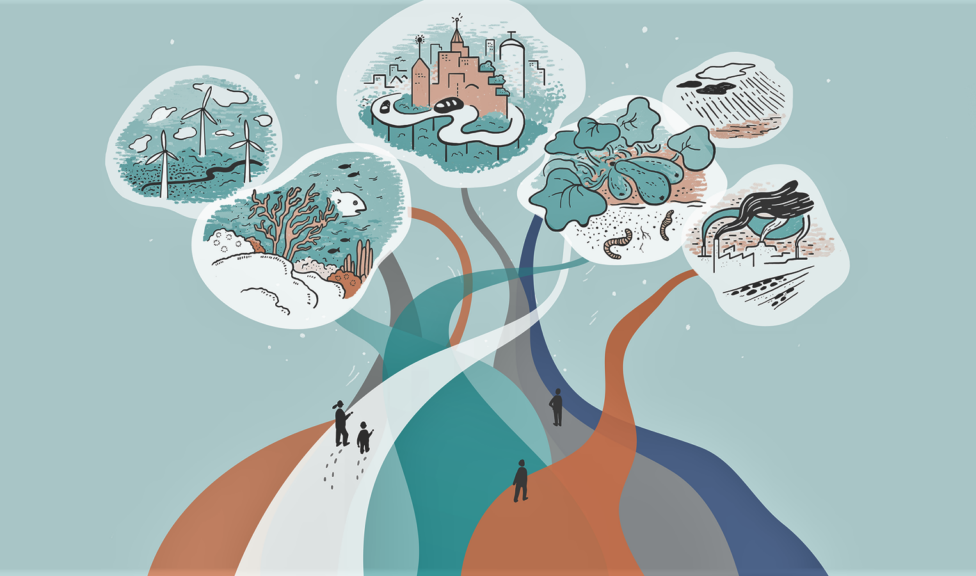
The year is 2050, world population has reached 10 billion and the vast majority of people live in cities. The biosphere – for decades under catastrophic pressure – experienced a turn of fortune in 2030, when the sustainable development goals were declared a success. Climate change was halted below 2 degrees. Ecosystem restoration and protection secured degrading ecosystem services and coastlines. Investments in agriculture created resilient supply chains, and financial innovations placed resources in the hands of local communities. The tide was turned.
A new Global Resilience Partnership (GRP) and Itad report distils and illuminates the latest evidence from across the breadth of the GRP to inform future resilience programming at a time when it is more important than ever. Building resilience where it is needed the most The world is increasingly unpredictable with more people than […]
The Resilience Insights Report distils and illuminates the latest evidence from across the breadth of the Global Resilience Partnership to inform future resilience programming at a time when it is more important than ever.
We use traffic log cookies to identify which pages are being used on our website (www.globalresiliencepartnership.org). Cookies help us provide you with a better website, by enabling us to monitor which pages you find useful and which you do not. A cookie in no way gives us access to your computer or any information about you, other than the data you choose to share with us.