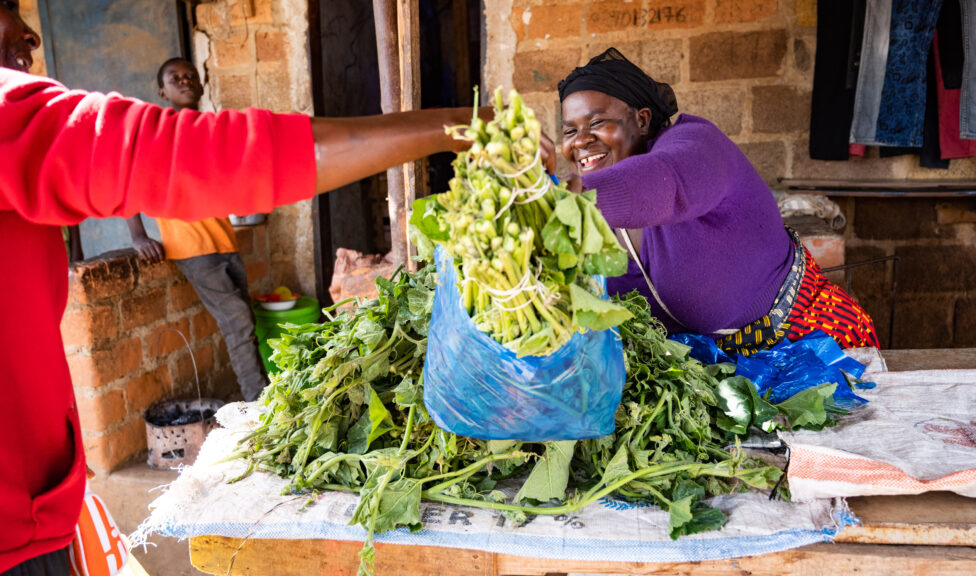
We sat down with Amanda Jonsson, GRP’s Knowledge Officer, to explore the Seeds of Transformative Resilience work and what it tells us about how change takes root. At the heart of this approach are “seeds”, local or regional initiatives. Learn how these initiatives are driving transformation on the ground and what they reveal about building more just, resilient systems at scale.

1. For those who may not be familiar with the Seeds for Transformative Resilience work, can you tell us what it is and why it matters?
A “seed” can be new ways of thinking or acting, a social movement, an institution, or a new technology, all of which can contribute to more sustainable and just futures. In this day and age, we need sources of inspiration that offer positive examples of transformative action, and these can be found in many places around the world. What is important about this work is that it shows us that innovations can take many shapes. TheyBy studying these seeds, we can learn a lot about what works, what does not, and what supports their contribution to the larger transformations we need today.
2. GRP works across innovation, knowledge, and policy. How does your work help weave together these different areas in practice?
In this project, we have worked closely with GRP’s innovation challenges, supporting many innovative initiatives over the years. In this project, we worked with initiatives from the RAIN challenge and invited them to participate in the research study. These initiatives all qualify as seeds; they are local initiatives working to change the status quo, shifting how things are normally done, testing innovative business models, and supporting farmers, women, and community members. For us, this was the perfect opportunity to learn with them. The research has generated new knowledge about what actually supports transformative change, and these lessons are ones we can integrate into our innovation work at GRP moving forward, as well as shaping our research.
3. What challenge or gap were you responding to?
We wanted to expand our understanding of what supports these seeds or initiatives to do their work. We have been developing a framework to understand and assess the factors that enable transformative change. We tested and adapted a framework for agriculture and food systems. We also wanted to broaden the way we assess sustainable business models and recognise that these assessments can sometimes be too narrow, failing to account for the longer time horizons of transformative change. This can make it difficult to follow and monitor transformative processes or to identify the exact impact of a particular action that triggers change. For this reason, we focused on transformative potential.
4. What role does local knowledge or community leadership play in your approach?
The initiatives we have had the honour of working with and learning from in this project are either themselves leaders in their communities with deep local knowledge, or work closely with partners and farmers who are. What we have seen in this project is that local and contextual knowledge is really key to the initiatives doing their work. Many of them work on weaving different kinds of knowledge together, including local, indigenous, practical, and scientific, to inform their activities, support, and action.
You can have a really great solution, but without local knowledge and community leadership, you will lack many essential elements for transformative change. We have heard many stories about externally imposed resilience interventions, which usually do not last long and sometimes risk increasing inequalities and reducing sustainable farming ways. We clearly see in these initiatives that working with and building local knowledge into your solution is key. As many of those we interviewed have said, farmers have often used the same practices packaged as “innovations” for decades, and that uplifting, sharing, and fostering this local knowledge matter.
5. What do you hope readers take away from learning about Seeds?
We hope that readers will be inspired by the work of these seeds. They showcase broad and diverse ways of agricultural innovations and how transformative potential can be fostered. We hope that it helps people see that transformative change can take many shapes, happen at different scales, and that one initiative won’t change everything, but that a collective can.