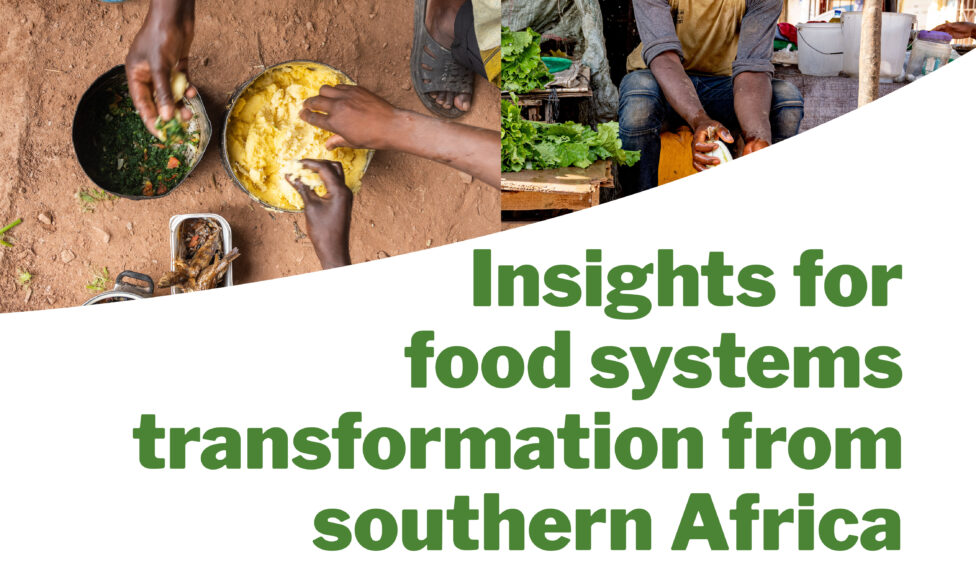
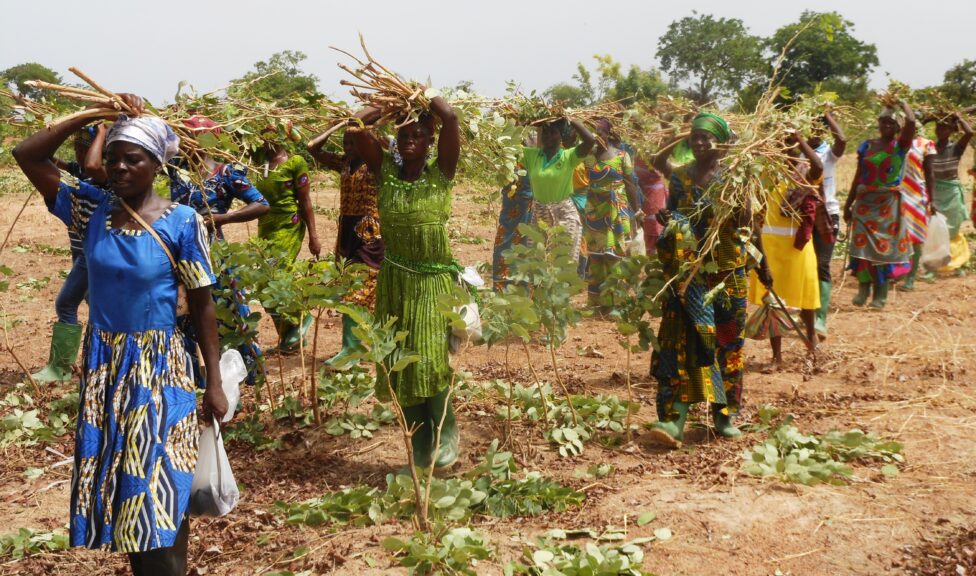
Transformation is needed to move southern Africa’s current food system into a space that is responsive to future uncertainties, climate-resilient, as well as environmentally and socially sustainable. Research plays an integral role in this shift. This report contextualises the actions of the Southern African Resilience Academy (SARA) in 2021, a year covering many pivotal events towards food systems transformation.
New Advancing Resilience Measurement Consultation Report by USAID, GRP and University of Arizona addresses the challenges and gaps in resilience measurement and evidence by setting a common agenda for actors.
Economy and Finance for a Just Future on a Thriving Planet explores the role of economic metrics and the finance sector in a new Anthropocene context. The report synthesizes the finding of a series of dialogues by leading scientists, international organizations, investors, and other change-makers on what a new agenda for economics and finance should look like, and defines tangible pathways for action for our living planet and for prosperity for all.
Environment of Peace: Security in a New Era of Risk surveys the evolving risk landscape and documents a number of developments that indicate a pathway to solutions––in international law and policy, in peacekeeping operations and among non-governmental organizations. It finds that two principal avenues need to be developed: (a) combining peacebuilding and environmental restoration, and (b) effectively addressing the underlying environmental issues. It also analyses the potential of existing and emerging pro-environment measures for exacerbating risks to peace and security. The findings demonstrate that only just and peaceful transitions to more sustainable practices can be effective––and show that these transitions also need to be rapid.
Biodiversity risk is increasingly going to be on the corporate radar as part of ongoing work to mitigate climate change risk (and support nature-based solutions) and broader initiatives on ESG. At the same time, accounting and reporting standards for biodiversity-related risks and impacts are taking shape.
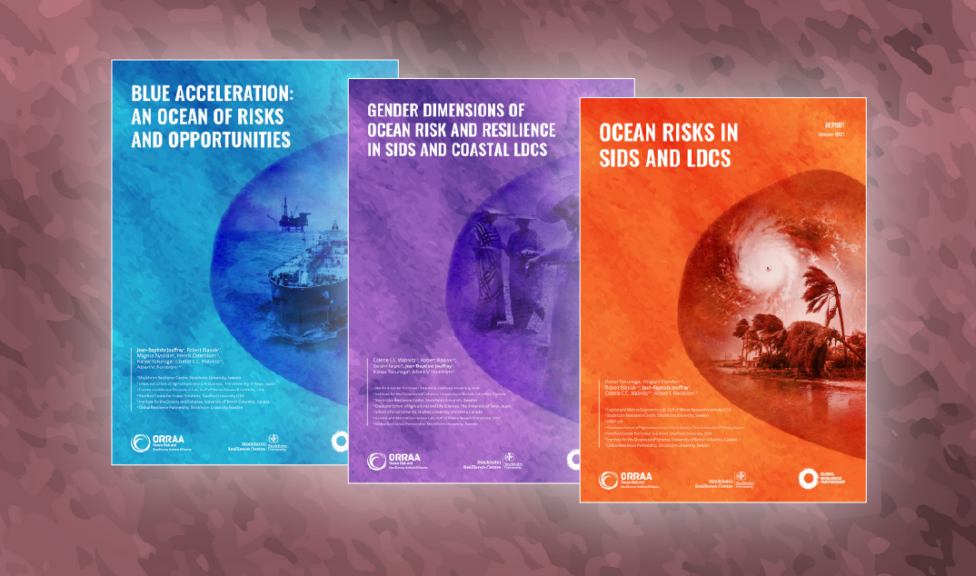
Our ocean is changing faster than at any time in human history. Risks associated with sea level rise, storm surges and coastal flooding are multiplying, affecting billions of lives and livelihoods and threatening critical coastal ecosystems. Coastal communities in LDCs and SIDS are likely to be most severely impacted, with women and girls especially hard-hit. Key messages from the trio of Ocean Risk Reports by the the Stockholm Resilience Centre and the Global Resilience Partnership, and commissioned by the Ocean Risk and Resilience Action Alliance (ORRAA).
Through a synthesis of peer-reviewed and grey literature, empirical data, and case studies from SIDS and LDCs, this report describes ut this show issues of equity and benefit sharing are playing out in the Blue Acceleration, highlights how SIDS and LDCs are at particular risk to stranded assets, and explores the role that finance, public or private, can play in assisting transformation towards an equitable and sustainable Blue economy.
Through a synthesis of peer-reviewed and grey literature, empirical data, and case studies from SIDS and LDCs, this report describes the prominent biophysical and anthropogenic stressors and their impacts on SIDS and LDCs, highlights the key social-ecological features of SIDS and LDCs that shape their vulnerabilities to these stressors, and suggests potential ways that can support SIDS and LDCs to mitigate ocean risks and build resilience.
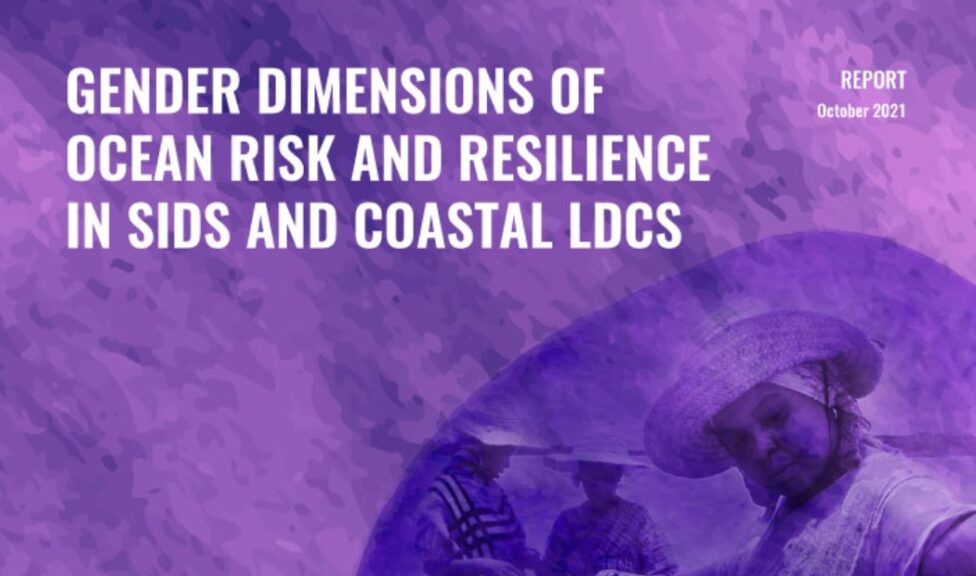
Through a synthesis of peer-reviewed and grey literature, and numerous case studies from SIDS and LDCs, this report highlights gender roles in two key sectors of the ocean economy (small-scale fisheries and coastal tourism), describes the gendered dimensions of ocean risks, and summarizes efforts across SIDS and LDCs for gender equitable approaches to building resilience to ocean risks.
This brief provides a first assessment on how 15
local communities in the Global South are
building resilience in the face of COVID-19. We
found that communities used many different
coping strategies, spanning multiple social
domains of resilience, when responding to a
crisis.
The aim of this report is to share learning and insights from GRP’s experience of working with its Challenge Funds to drive innovation in resilience practice, by creating a safe space for Challenge Winners to test, learn and adapt their projects. It is aimed at those interested in learning about how to create a space to test innovations, take risks and embrace and learn from failure.
The purpose of this case study is to understand how GRP has supported its Challenge Winners to scale their resilience innovations, through documenting the Incubator’s role, project progress and achievements and learning emerging from this. This case study documents both early learning before the scaling activities accelerated into full implementation as well as achievements and learning taken from final reporting, alongside evidence about how the Incubator engaged with the wider base of grantees
This background paper is a joint contribution by Guidance for Resilience in the Anthropocene: Investments for Development (GRAID) and the Global Resilience Partnership (GRP)
The Resilience Insights Report distils and illuminates the latest evidence from across the breadth of the Global Resilience Partnership to inform future resilience programming at a time when it is more important than ever.
The Water Window Challenge comprises 11 Challenge Winners that implemented 12 projects. Water Window Challenge Winners were funded by the Z Zurich Foundation. This synthesis summarizes progress the Challenge Winners have made, and how they have done it.
Ten projects focused on transforming risks around shocks and stresses experienced across the target geographies into opportunities, with the overarching objective of reaching millions of people. Funded by USAID, each grantee received up to US$1.45 million to implement and scale up their resilience solutions. This synthesis stock-takes and synthesizes the progress made by the Global Resilience Challenge projects.
42 programs that were either funded or implemented by members of the GRP were reviewed to gather the best insights from the whole community. Where possible, the effectiveness of a particular intervention is provided based on robust quantitative or mixed methods data, which was prioritized as part of this review.
GRAID is a programme hosted by the Stockholm Resilience Centre (SRC) and funded by the Swedish International Development Cooperation Agency (Sida). It aims to bridge the worlds of resilience thinking and development practice.
Key highlights: Towards a research-action agenda for resilience and development in southern Africa. This report outlines key outcomes and highlights emerging from discussions held during the second Resilience Action Dialogue in June 2019.
We use traffic log cookies to identify which pages are being used on our website (www.globalresiliencepartnership.org). Cookies help us provide you with a better website, by enabling us to monitor which pages you find useful and which you do not. A cookie in no way gives us access to your computer or any information about you, other than the data you choose to share with us.